Guide to the Philippines: the underrated tropical paradise of Asia
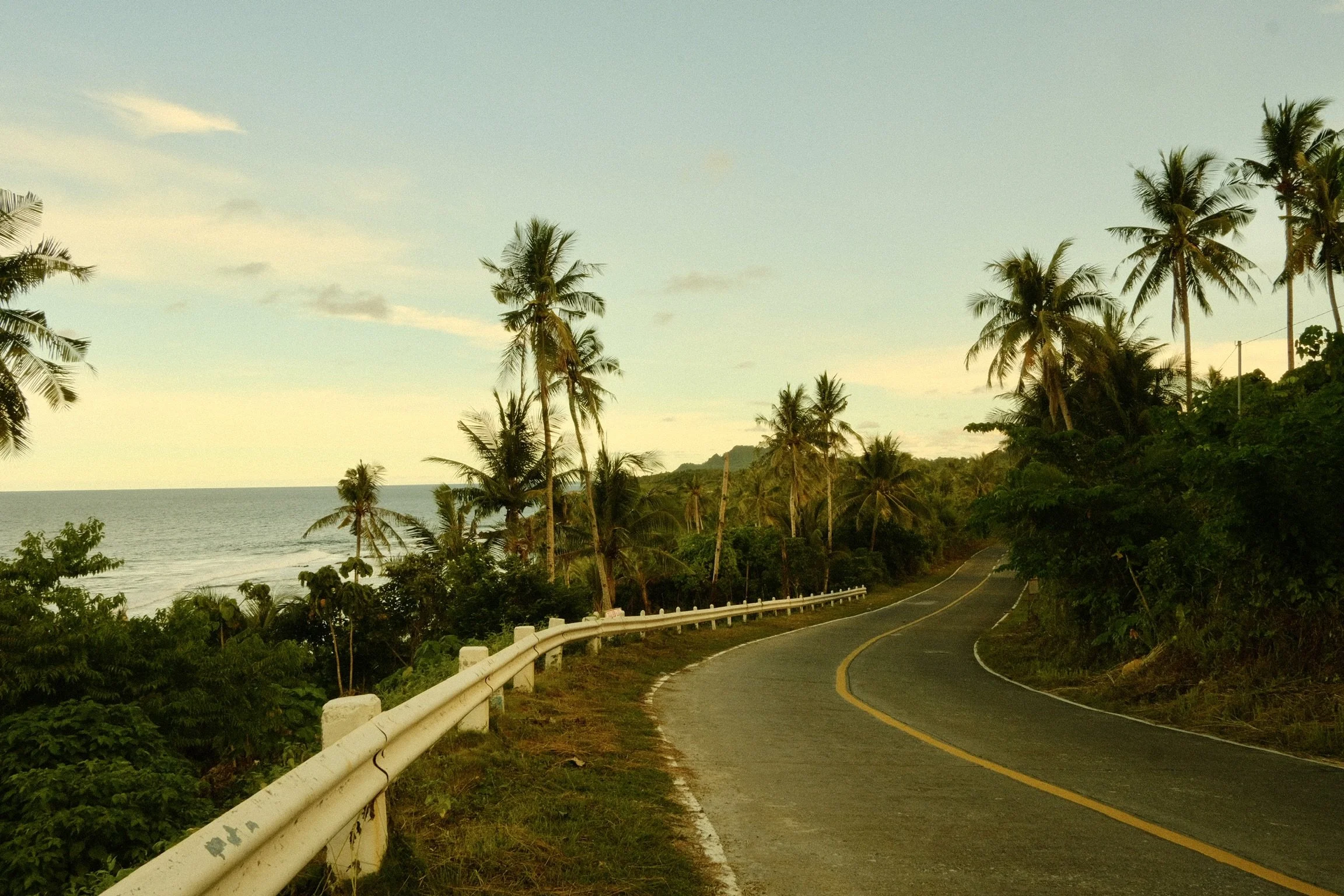
Philippines, my favorite Southeast Asian country that captivated me with its tropical beauty, friendly locals, and diverse landscapes
September 2025
I spent 6 months in the Philippines from February to August 2025. 2 months were spent traveling around and 4 months spent living on Siargao. I really loved the Philippines and would say it’s my favorite Southeast Asian country I’ve been to. Though as a slow traveler taking unusual routes I’ve only been to 3 (Indonesia, Malaysia, Philippines), my good friend from home spent 4 months backpacking Southeast Asia on the typical loop that hits most of the countries (Thailand, Vietnam, Laos, Cambodia, Philippines), and also agreed Philippines was his favorite. I think we actually have them almost all covered between the two of us with a clear winner!
People ask what I love so much about the Philippines and for me, it comes down to a few main things: the landscapes, the language, and the people. When I think of paradise and picture palm tree lined beaches and a sort of peaceful simplicity, this is what I think of as the Philippines. The Philippines boasts a stunning tropical paradise landscape, and one that surprises you from a country so under the radar.
Next are the people and the language, which for me are related here. When traveling, getting to really know the culture and connecting with local life is hugely important for me. You can find beautiful landscapes anywhere, so finding a culture of people you can connect with and appreciate is a big part of what makes a place special to me. And what stood out to me about Filipino culture, is how warm, welcoming, friendly, and fun everybody is. How you’re welcomed and received with open arms. And since English is spoken there, it makes communicating and really getting to know the people, that much easier.
English being a main language there isn’t to be underestimated. It makes logistics and getting around much easier - signs are in English, menus are in English, you can ask for help and communicate needs in English. And it also allows you to have actual conversations with locals there, getting to know them on a deeper level.
Overall, the Philippines is a huge country with so many different places offering different things to visit. I really enjoyed my time here basking in the endless tropical landscapes and getting to experience a unique Filipino way of life. I’d definitely recommend it as a place for those who like a bit more off-the-beaten-path and adventurous destinations, full of beautiful tropical and marine life, with a friendly, welcoming, and warm culture.
Contents
What is the Philippines like?
Where to go in the Philippines
When to go to the Philippines
Common routes through the Philippines
Useful information about visiting the Philippines
What is the Philippines like?
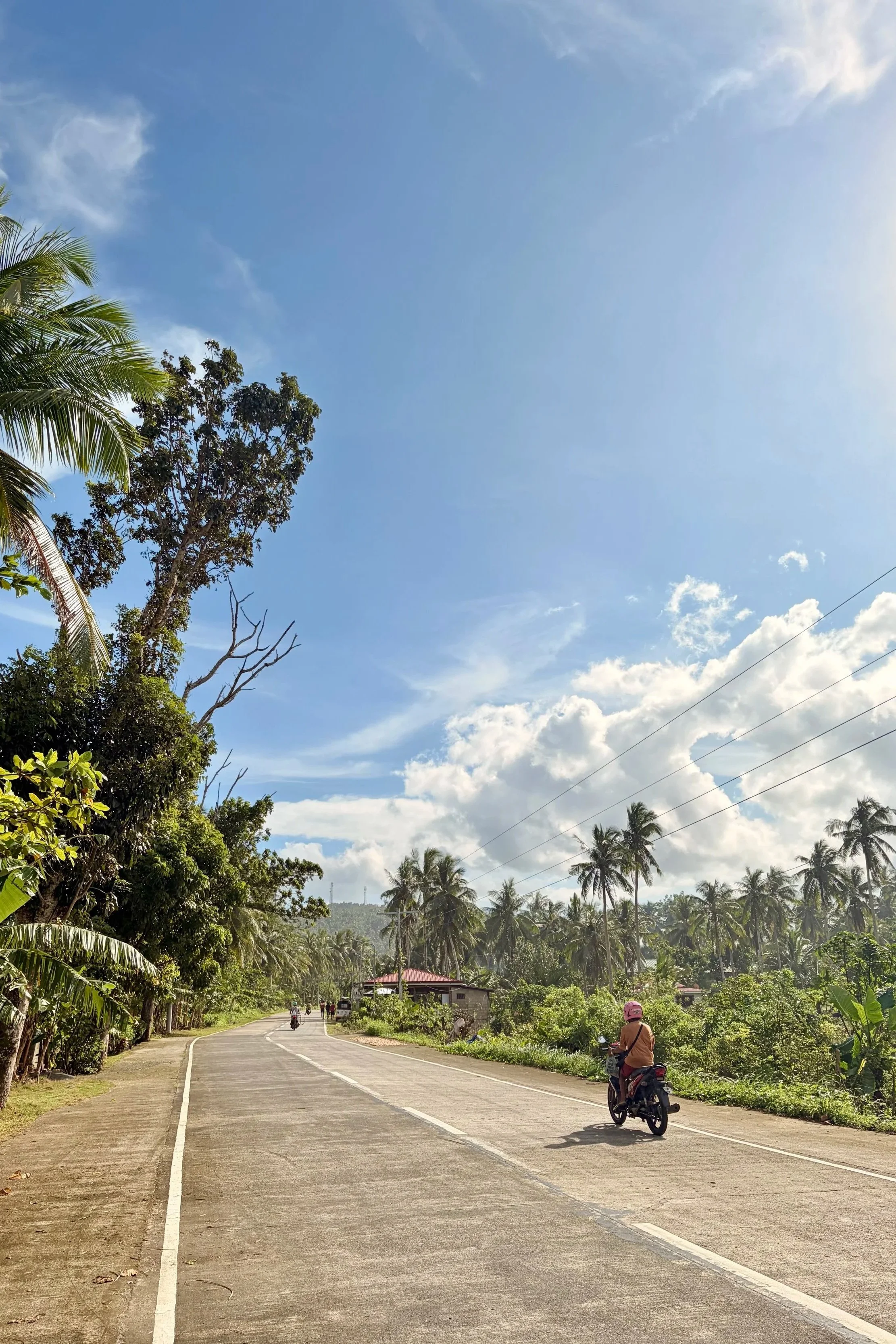
People say the Philippines is like the Latin America of Asia, and I would agree. Filipino culture is very friendly and welcoming. And the fact that they speak English, makes it so much easier to get to know them and have real conversations with locals. Filipinos also love any cause for celebration and to have fun. If you’re in a place with locals, expect to be invited for a drink, or for them just be drinking out of a bottle of rum and offer you some. Expect to hear karaoke being belted out from houses, and for neighbors to be blasting Filipino techno at all hours of the day.
Geographically, the Philippines is made up of thousands of islands. The main regions are Luzon (north), Visayas (central) and Mindanao (south). The islands are absolutely stunning, and what I imagine when I picture paradise. I’ve spent a lot of time on the coast of Latin America, as well as in Indonesia and Thailand, and I would say the Philippines is the most like a tropical paradise.
Being a huge archipelago of islands, getting around the Philippines can be tricky and time consuming. Oftentimes to get from one destination to another, you’ll need to take a combination of buses, ferries, and/or planes. Because of this, it usually invites a more adventurous traveler and someone that has more time.
The big cities of the Philippines, such as Manila and Cebu, are honestly not pleasant at all. Traffic is horrible, poverty and poor living conditions are apparent, and it’s overall not a nice place to walk around or explore. I would recommend spending as little time in the large cities as possible, and making your way to the islands, or to smaller towns.
In terms of tourism, the Philippines is a relatively under the radar destination in Southeast Asia, and I personally love this. It’s feels less touristy compared to other similar places such as Indonesia and Thailand, yet boasts amazing sights to see. Since it’s a bit off the beaten path and more difficult to travel, it also attracts the type of traveler who enjoys an adventure.
Since it’s not as setup for tourism as other neighboring countries, amenities can also be harder to come by. In addition to the arduous travel journeys, you’ll oftentimes also lack hot water and face frequent power outages. The weather can also be unpredictable and challenging. While there are distinct dry and wet seasons, in certain parts of the country, you can expect sudden rainshowers year-round even when it’s supposedly sunny. It’s all part of the experience though!
As far as food goes, it’s honestly not the best of Asia. At first glance, it appears pretty unhealthy, with fried and BBQ meats lining the street and an abundance of fast food chains in the cities. But if you get to eat more locally, you’ll see that the local diet generally consists of rice, protein, and vegetables. Fairly balanced and healthy. At most restaurants, you can expect to find some dish consisting of meat and rice. Some popular dishes include curry, chicken adobo, pork sisig, and a variety of barbeque. Sisig is my personal favorite dish and you must try it! I don’t eat meat and I can occasionally find fish or tofu sisig, and it’s amazing!
Where to go in the Philippines
The Philippines is huge and you’ll likely be inundated with information when you first start planning your Philippines trip. There are endless beautiful islands to visit, and you could easily spend several months exploring all the different beautiful places there are. Here are the places I’ve personally visited and my recommendations for each place.
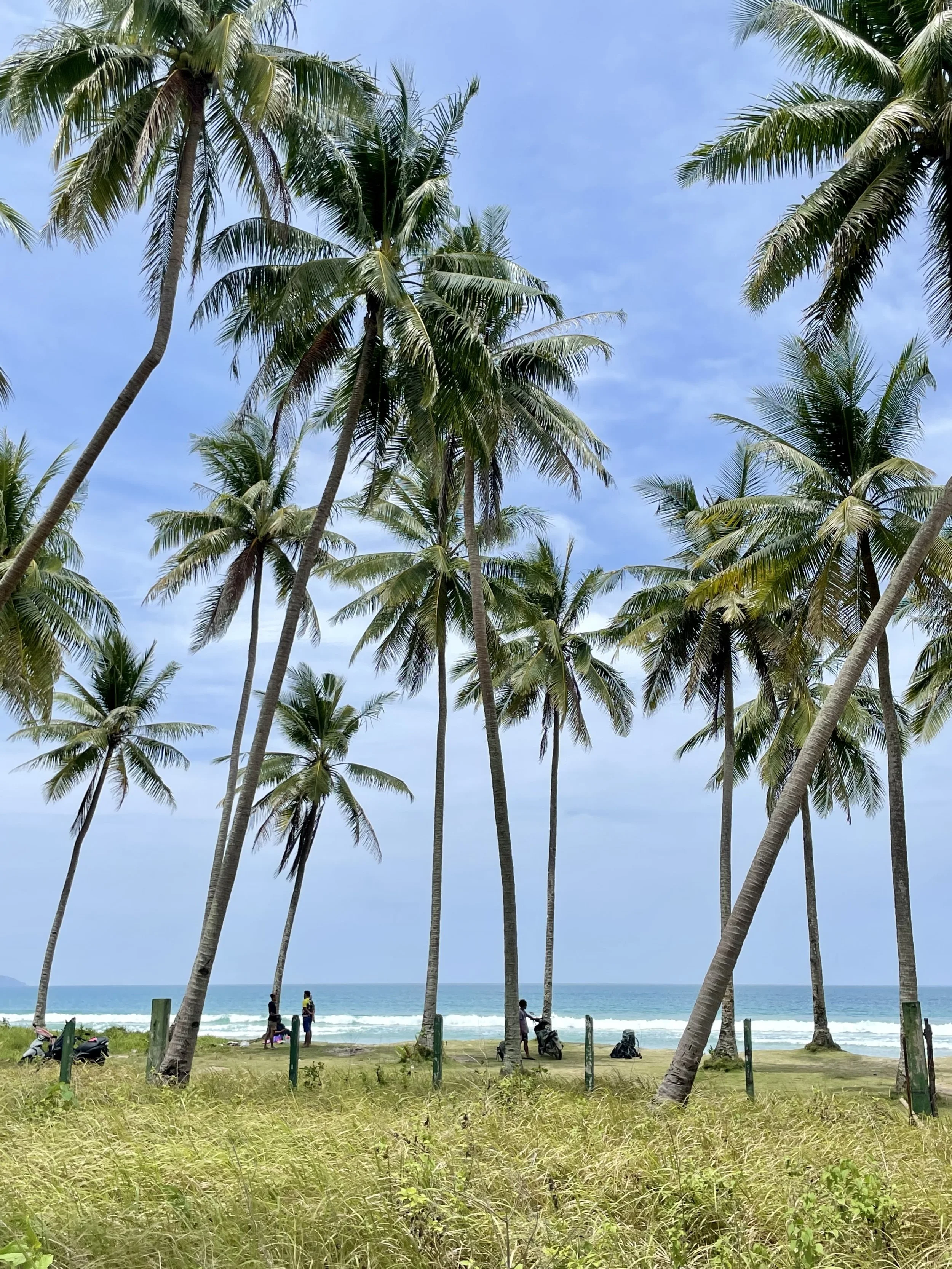
Palawan
A big island with many different dramatic and beautiful landscapes, with each town featuring its own vibe
Palawan is the place my local Filipino friends told me to go when I said I wanted somewhere that feels like paradise, but is not too crowded. Palawan is a big island with many different towns, all beautiful and different from each other. The main towns are: El Nido for stunning, dramatic karst landscapes and a lively nightlife scene, Port Barton for a rustic yet lively small town filled with a laidback backpacker crowd, and Puerto Princesa which I personally didn’t spend time in and heard described as an uninspiring town, though with a few nature things to do around. More off the beaten path, I highly recommend San Vicente for stunning tropical landscapes with no tourists, and the south and Balabac islands for a very local tropical paradise experience. Overall, Palawan is a beautiful island with many different landscapes and experiences to offer.
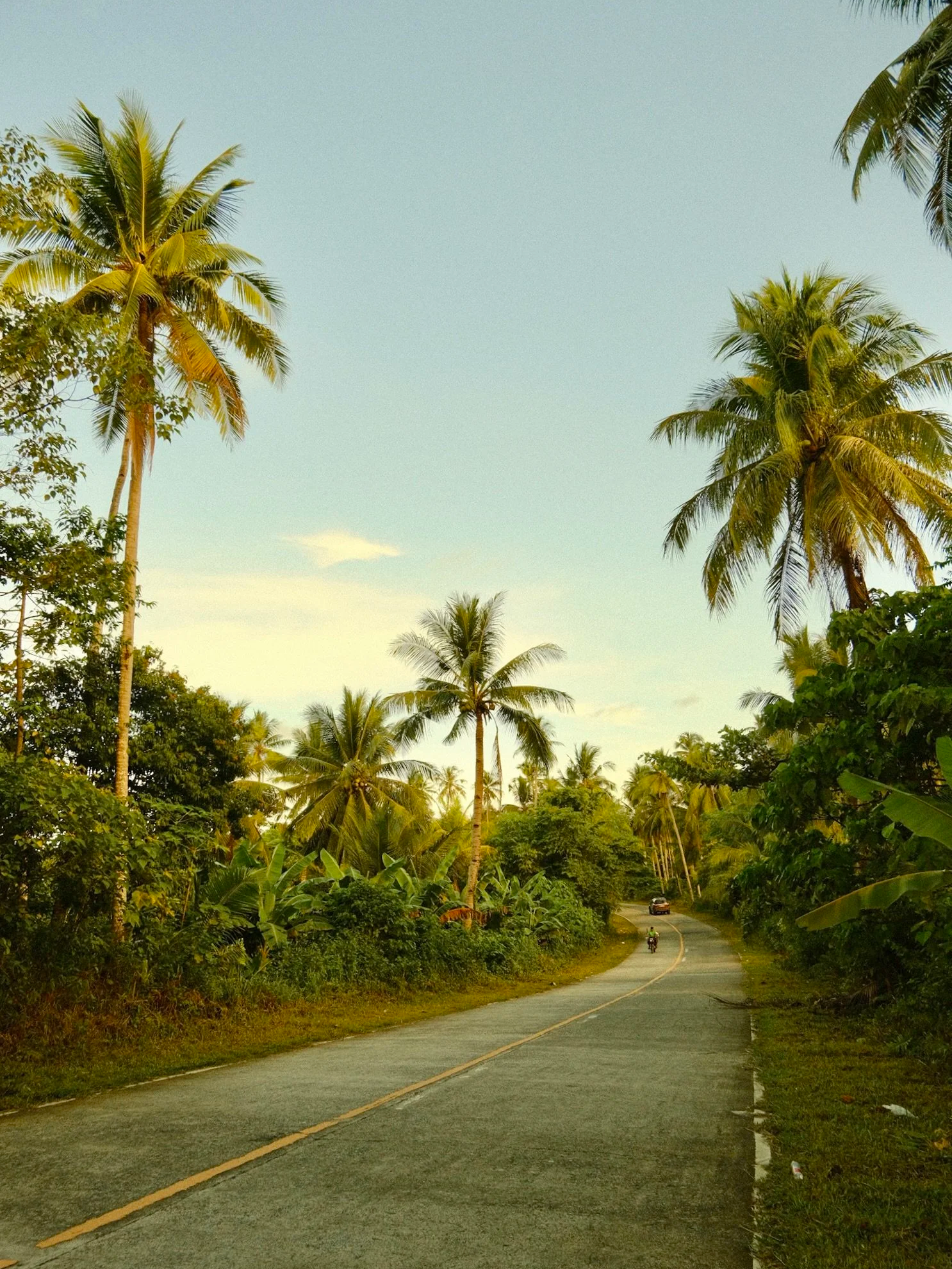
Siargao
A small island teeming with lush tropical landscape, world class surf, and great island vibes. Visit the south for a lively nightlife scene, and the north for peace
Siargao is a small island famous for its world class surf and lively party scene. In the south (General Luna), you’ll find tons of restaurants, coffee shops, bars, and a very lively nightlife scene that make up the bustling town center. It can get very crowded here, and is the place to go to party and to be around a lot of people and things to do. In the north, you’ll find a very peaceful and laidback environment surrounded by beautiful nature. I lived in the north for 6 months, and truly loved my time there. There’s a wonderful small community of travelers, attracting those that appreciate a slower pace of life and immersing in local culture, as opposed to being surrounded by a crowd of party people. Throughout the entire island, you’ll find amazing surf breaks in both the north and the south, though the north is far less crowded. Of all the islands I visited in the Philippines, I would say Siargao has the most beautiful tropical nature of them all.
Siquijor
A small island with the most pleasant, cozy vibes. Lots of nature to explore with waterfalls, snorkeling, caves, and beach time. With people around but in a comfortable way.
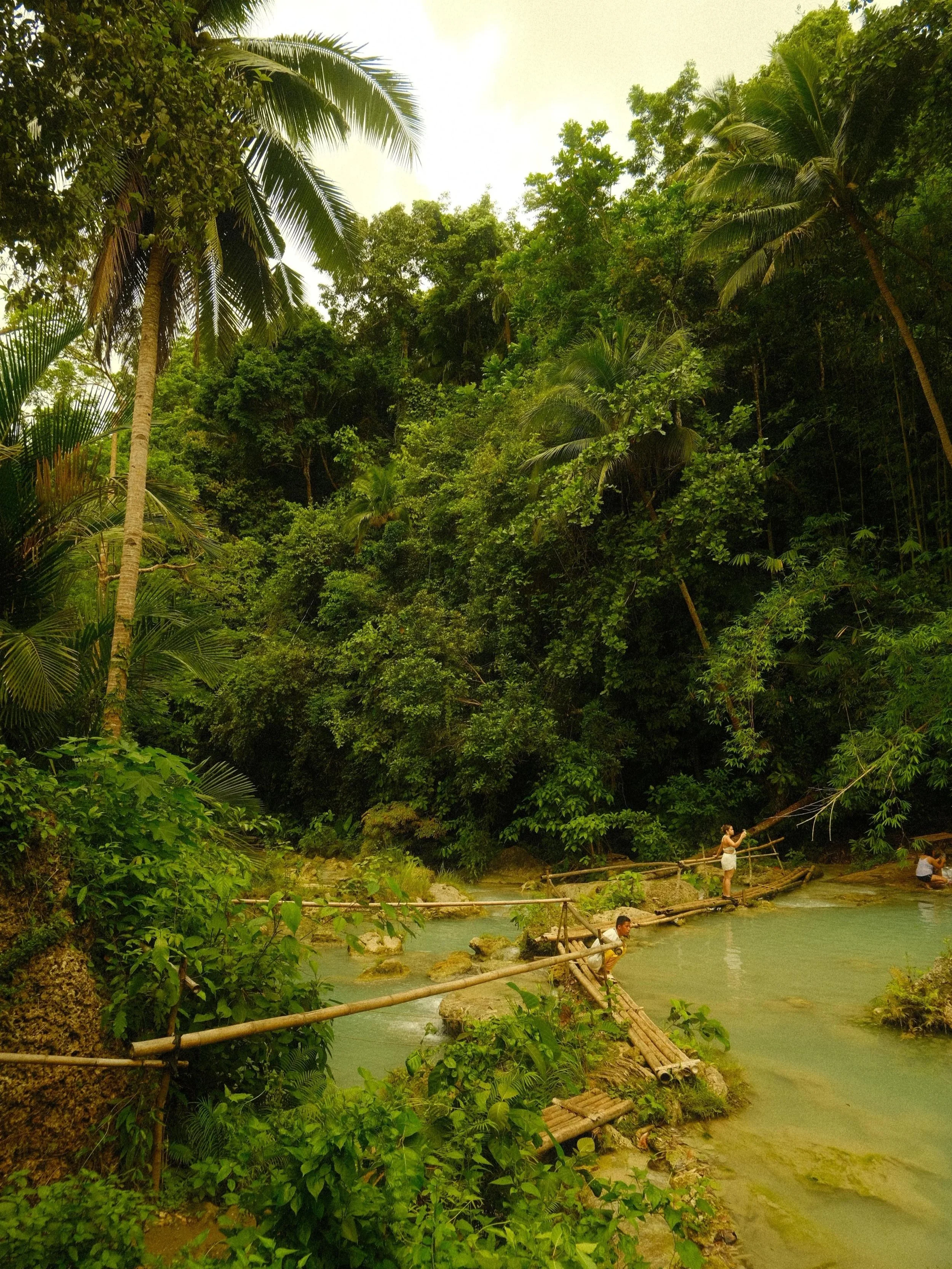
Siquijor is one of my favorite places in the Philippines. It’s a small island with an indescribable magical, warm, cozy vibe. It sees a fair amount of tourists, but also has plenty of local life. While it can be busy, it still feels very peaceful and pleasant. There’s an abundance of nature to explore, such as waterfalls, snorkeling and diving spots, caves, cliff jumping, and nice, relaxing beaches. Siquijor is a great island to visit if you enjoy exploring lots of different types of nature, while at the same time enjoy a peaceful, laidback environment. It’s the kind of place that just feels relaxed, with both travelers and locals just enjoying their lives. Since it’s a relatively small island, it’s also a great island to take the scooter and just drive around and explore.
Camiguin
A very small island to experience local life in a laidback atmosphere, while enjoying various nature attractions
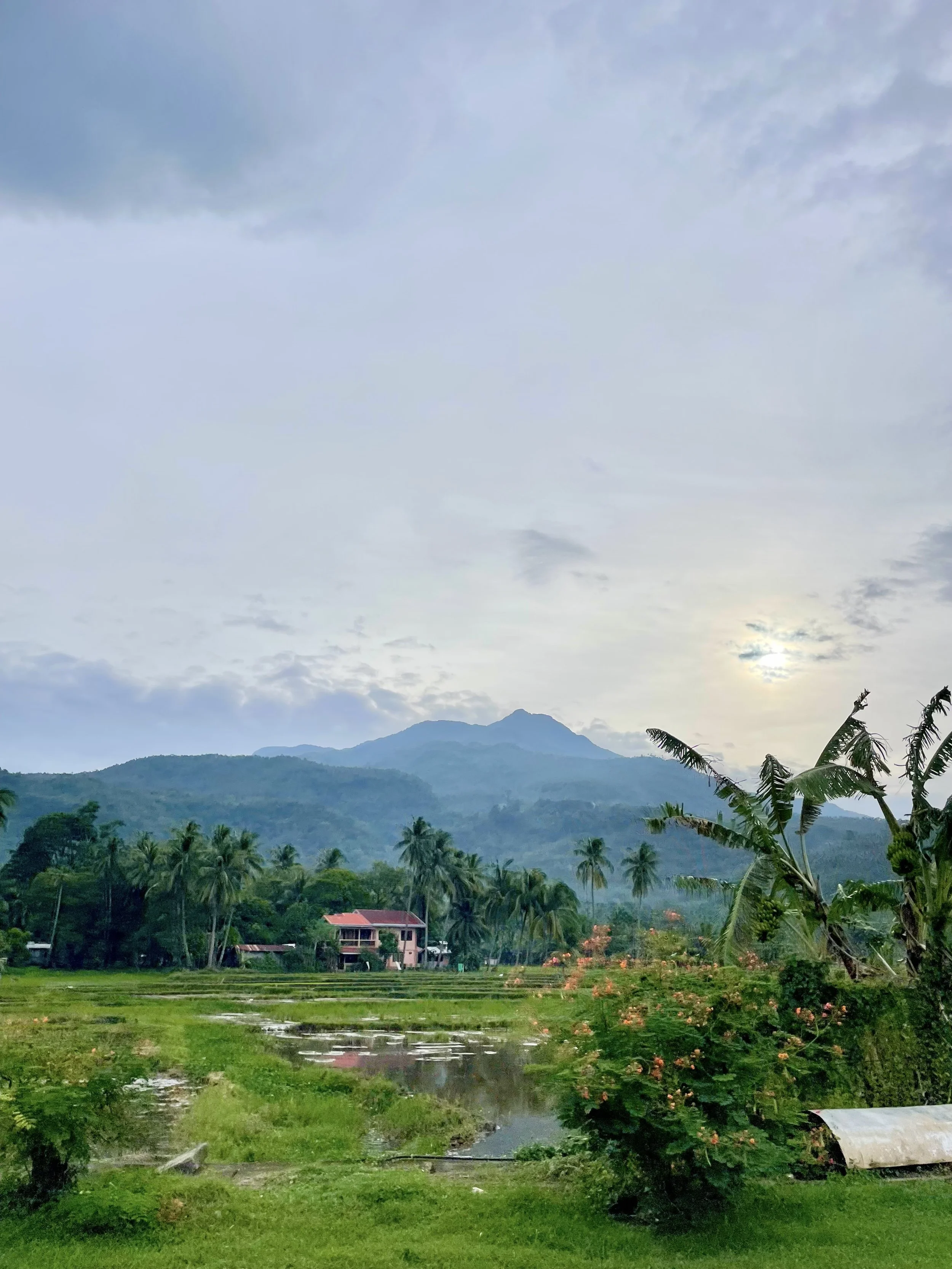
I really enjoyed visiting this little island. It’s a very local island withour many tourists, and I love that you can really experience locals living their lives there. It’s probably one of the only islands that feels very local, and at the same time has an environment and plenty of things that tourists enjoy. The people there are very friendly and you can tell they enjoy their lives life there. While it’s a very small island, there’s a busy local economy, but at the same, is relaxed, peaceful, and boasts plenty of nature to enjoy. Camiguin is great to visit if you want to experience local island life, that’s very laidback and pleasant to explore. Since there are not many other travelers, it’s an island that’s better to visit with someone. Otherwise there are chances you may not meet many other people there.
La Union
A small, lively surf town to surf, chill, party, and immerse with locals
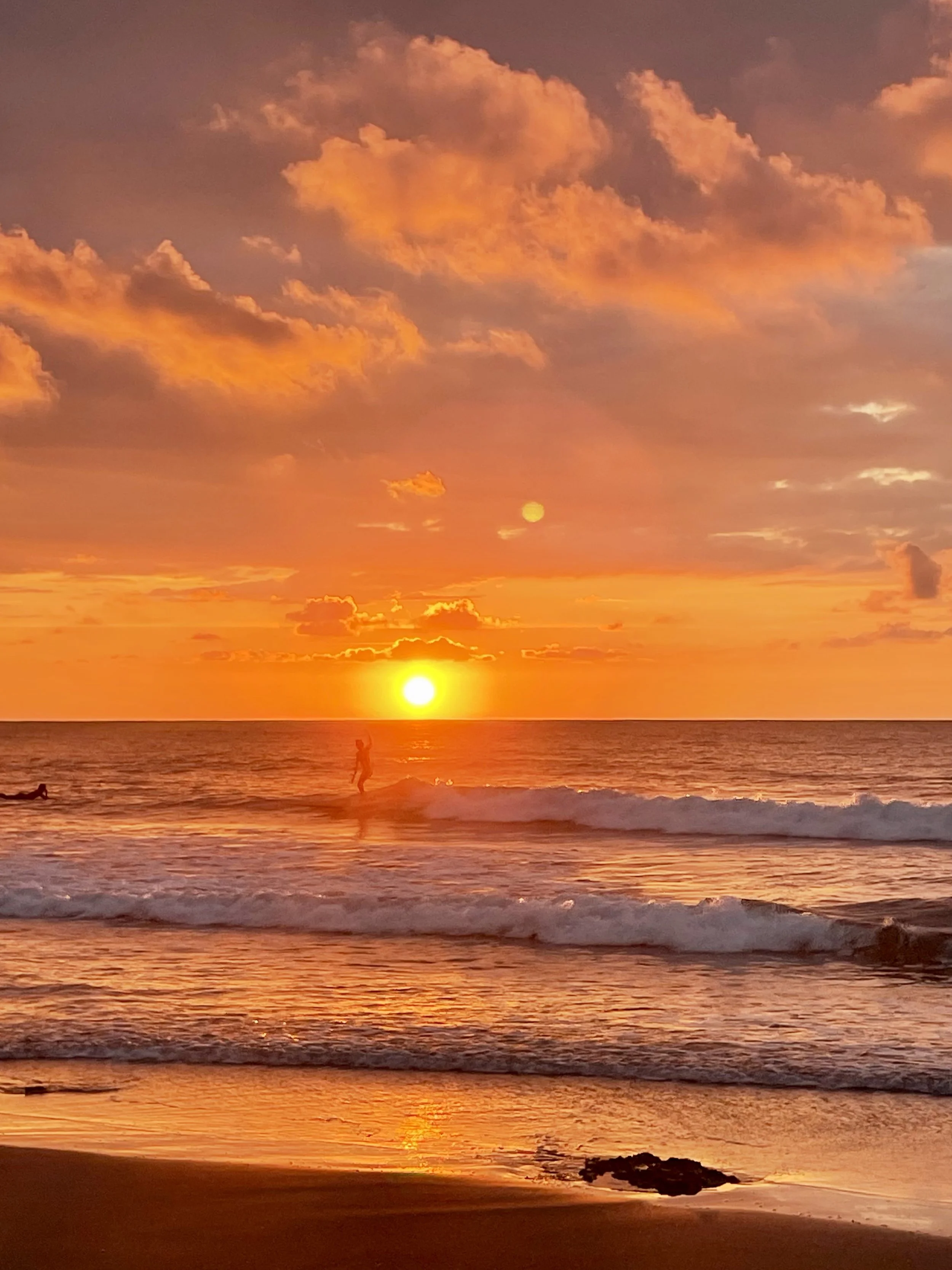
La Union is a very local surf town in the northern Philippines, on the island of Luzon. Since it’s hard to reach and most of the town is centered around surfing and partying, it’s most worth it to visit if you surf or if you are already doing a loop around northern Philippines. La Union is a small to medium sized town with plenty of restaurants, coffee shops, and beach bars. While it’s small, there’s a busy road that runs through it, which makes it feel not particularly quaint. Life there consists of surfing, hanging out, catching sunsets on the beach, and enjoying nightlife. One thing I enjoyed most about my time there, is how local it is. Most Philippines destinations have a lot of foreign tourists, but La Union only really has tourists coming up for the weekend from Manila, so you can get a taste of local life. I’d recommend La Union if you’re looking to surf somewhere with less foreigners, and want to enjoy a chill pace of life while still having plenty of restaurants, cafes, and bars around. The last thing to note is that La Union is not the most beautiful place. It’s not the palm tree lined paradise that much of the Philippines is. But it’s still nice and gives you a unique taste of local life that’s otherwise hard to find in the more traveled places.
When to visit the Philippines
General weather patterns
The Philippines generally has two seasons: dry season (high season) and wet season (low season). Seasons differ in different parts of the Philippines, though generally speaking, most of the Philippines follows the pattern:
Dry season: November/December to May/June
Wet season: May/June to October/November
The best time to visit the Philippines is during dry season where you’ll see sunny days and minimal rainfall. The country is fully accessible during dry season, including many beautiful islands and more remote areas. The weather is more temperate from December to February making it a more popular time to visit, while it’s a bit more hot and dry in March and April, though still a good time to visit.
The wet season falls between May and October, but this doesn’t mean it rains all the time. Usually the climate is characterized by fast and refreshing rainshowers alternated with sunny skies. It’s still possible to have sunny days with no interruption for several weeks, and it’s also possible to have several days of rain on end where you won’t be able to do much outside.
Areas with different weather patterns:
The central islands in the Philippines, such as Cebu and Bohol, usually experience fair weather all year long.
The eastern coast of the Philippines, such as Siargao, has a very pronounced rainy season from December to February, and does not have a full dry season. Instead, the rest of the year has a dry and rainy mix, with generally sunny skies and occasional rainshowers scattered throughout.
In summary, the best time of year to visit most of the Philippines is from December to June, and the best time to visit Siargao is anytime outside of December to February. The high season of Siargao is from March to June, as it overlaps with high season for the rest of the country, and from September to November for the surf season.

Backpacking route through the Philippines
The most common backpacking route, taking around 1+ month
Fly into Manila. Manila is not a nice city, it’s best to get out of there ASAP or just spend 1 day exploring the nicer parts
Go from Manila to Coron, either by flight or overnight ferry
Take the 3-4 day boat expedition from Coron to El Nido
Travel around Palawan for 1-2 weeks
El Nido for stunning karst landscapes, island hopping tours, and a lively nightlife scene. It’s beautiful here, but I didn’t like the vibe very much.
Port Barton for a laidback, rustic, lively, small town popular with backpackers. Go for island hopping tours, visit Coconut Beach, and have sunset drinks on the beach.
Puerto Princesa is an uninspiring town but has a few nature attractions around. You’ll fly out of here, so you could stay to see it for a couple days if you like.
San Vicente, my favorite part of Palawan, is stunningly beautiful and very non-touristy. Stay in Alimanguan, a small local town at the coast where you can also surf.
The south and Balabac islands for a stunning, remote, and local island experience.
Fly from Puerto Princesa to Cebu
From Cebu, you can optionally visit Moalboal to see the sardine runs (I didn’t do this)
From Cebu or Moalboal, take a boat to Siquijor (my favorite island) and visit Siquijor for 1 week
From Siquijor, take a boat to Bohol and visit for a few days (optional, I heard Bohol is not as nice as Siquijor)
From Bohol or Siquijor, take a boat back to Cebu
Optional: If you’re big into diving, you can take a bus to Malapascua from Cebu, one of Philippine’s top dive spots. Then return back to Cebu
From Cebu, fly or take an overnight ferry to Siargao (my other favorite island) and visit for 1-2 weeks
Less common places I went and would recommend
Camiguin – Very small island with nice nature, a laidback vibe, and very local life. The best way to add in Camiguin is to go in-between Siquijor/Bohol and Siargao. To go from Bohol to Camiguin, you will take a series of buses and boats. Then from Camiguin to Siargao, you’ll take another series of buses and boats.
Dumaguete – A nice college town of the Philippines where you’re able to experience lively small city life amongst locals. There’s also a decent older expat population here. The best way to add this to your route, is to either go from Cebu to Dumaguete by bus, and then take a boat from Dumaguete to Siquijor. Or, if you’re in Siquijor for a while, you can reach Dumaguete easily by boat and take just a short few days trip to Dumaguete and then return to Siquijor.
Northern Philippines (La Union, Baguio, and Banaue) – A great way to experience “true” (non-island life) Philippines surrounded by local life. You can experience a surf beach town, a college town in the mountains, and world renowned rice terraces. The best way to add this to your route is when you first fly into (or out of) Manila. From Manila, take a 6 hour bus to La Union. From La Union it’s a 2 hour bus ride to Baguio, and from Baguio it’s a 6-10 hour drive to Banaue. Then I did it all in reverse to return to La Union, and eventually took a flight out of Clark Airport (much better than Manila Airport if you have a choice).
Useful information about visiting the Philippines
Transportation and getting around
Getting between islands: Getting between islands in the Philippines is a bit of a drag. Expect long travel days that involve buses and ferries. In each of my guides, I included how to get to each island with both land/sea options and air options if it exists.
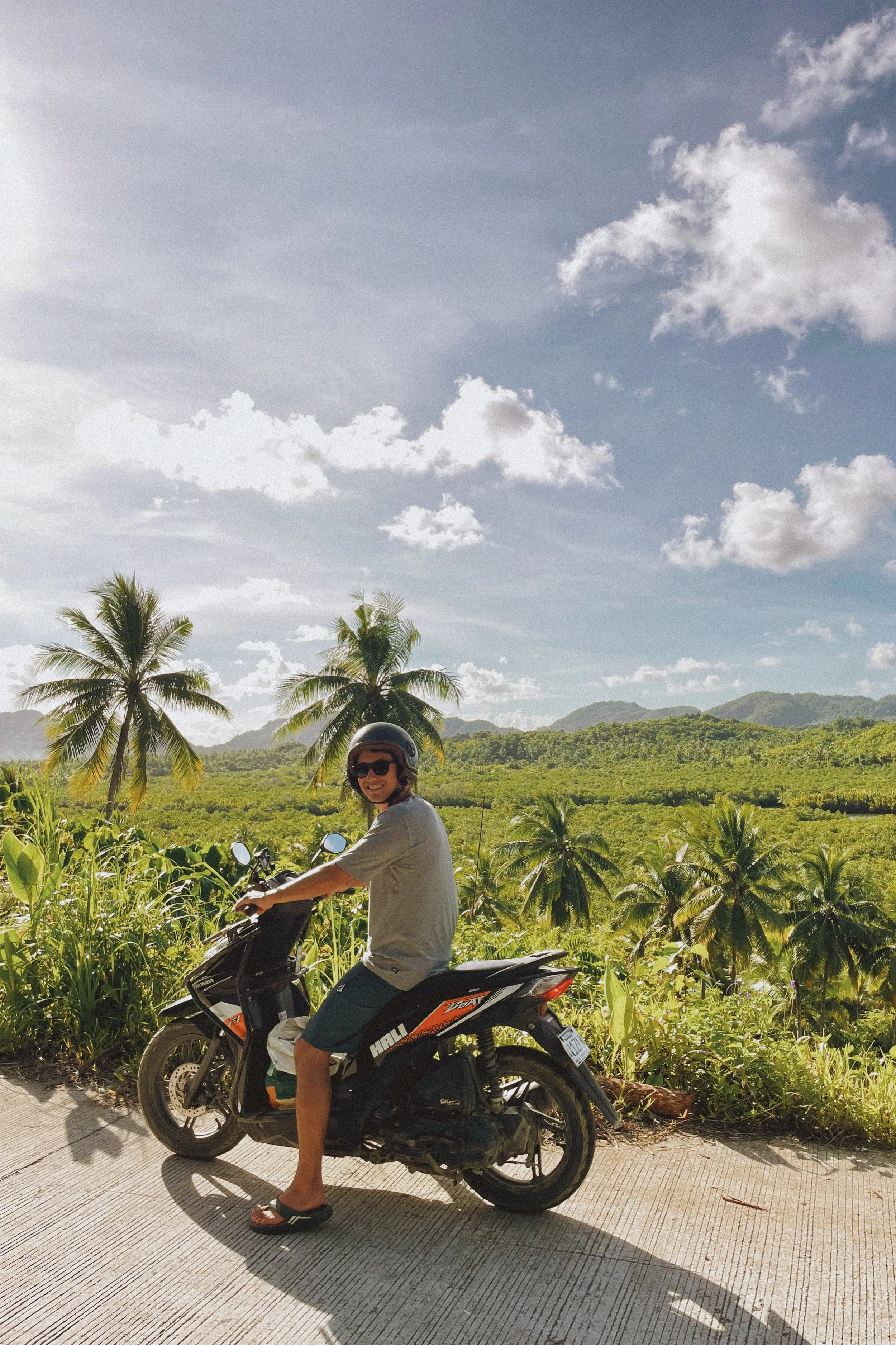
Once you’re at your destination in the Philippines: the best way to explore will generally be by scooter. There are usually plenty of scooter rental places available either in town, or at the pier/airport where you arrive to the island. You can also contact your accommodation to ask about scooter rentals.
Public transportation: On the islands, there is generally no public transit. You’ll either have to drive yourself by scooter, or hire a tuktuk off the road. Within the cities (e.g. Manila, Cebu, Baguio, etc.), you can take jeepneys, which look like old school American schoolbuses and are essentially the local bus system, hail a taxi, or take a tuktuk. Larger cities like Manila and Cebu also have Grab (the rideshare app of Southeast Asia).
How to take a jeepney: Jeepneys are extremely cheap and can be a very convenient form of transportation if you’re up for some adventure. These are the old school schoolbuses you see driving on the street. They each have a route and destination, but it’s impossible to know if you’re a traveler just looking at them. I usually either ask around which jeepney I should take, or when a jeepney passes by, I ask the driver if it’s going to pass by my destination. They are very helpful and will help you out. Then just hop on the jeepney and pay your fare (about 10-20 pesos). When you arrive at your destination, you can either tell the driver if you’re sitting near him, or tap a coin onto the metal handlebars above the seats to indicate you want to get off. They will stop whenever anyone does this.
How to take a tuktuk: If you see a tuktuk sitting around, you can simply just ask the driver how much it is to take you to your destination. Note that prices are negotiable. They’ll usually tell you a high price to begin with and you can negotiate down a bit.
Visa and immigration in the Philippines
For most Westerners (e.g. Americans and Europeans), when you arrive to the Philippines, you’ll be granted 30 days for free. If you want to stay longer, you can continue to pay to extend your visa either online or in-person at an immigration office. Below is an outline of the visa extension process:
After your first 30 days, you can extend your visa for another 30 days online (select Visa Waiver) or by visiting an immigration office in-person. It costs ~3500php ($60 USD) and gets approved same day. You can do the extension in the last 1-2 weeks of your 30 days.
After 60 days, you now have the option to extend for another 30 or 60 days. However, after staying for 60 days, you now need to obtain an Alien Registration Card. You must go in-person to an immigration office for this visa extension, as you’ll be required to fill out paperwork and take a photo for the Alien Registration Card. This the expensive extension because you’re required to get this card beyond a 60 day stay. The cost is ~4000php ($70) for the card plus ~4000php ($70) for a 2 month extension. The card is valid for 1 year. The card can be picked up at the immigration office you applied in after about 1 month. If you’ll no longer be in that area (like me), you don’t actually need to pick up the card. When you go for future visa renewals, they can look up your information in the system. The only downside is that it prevents you from setting up a GCash account and doing your visa renewals online, as the card number is required.
After this, you can continue to extend for an additional 30 or 60 days and now only need to pay for the visa extension, not the card. My 3rd visa extension (granting me 6 months total) cost ~3000php ($50 USD) and my 4th visa extension (granting me a total of 8 months) cost ~4800php ($85 USD). You can do these extensions online, but you’ll need your Alien Registration Card number, or in-person at an immigration office.
Important note if you stay over 6 months: If you stay over 6 months in the Philippines, you will need an Exit Clearance in order to leave the country. It’s advised to go to an immigration office 1-2 weeks before you depart to get the exit clearance. The immigration office was far from where I lived though and I decided to chance it and do it at the airport (Clark Airport). It was seamless and easy to do there, but I’ve heard from others that they had issues trying to do it at the airport upon exiting.
The cash and ATM situation
Like most places in Southeast Asia, most things are paid in cash in the Philippines. You can expect to pay in cash at almost all restaurants and most of your accommodations. If you want to pay for your accommodation by card, your best bet is to book through Booking.com.
ATM’s are common throughout all islands of the Philippines, but do be aware that in certain islands known for common electricity issues, such as Siargao and Siquijor, the ATM’s can oftentimes be down due to a power outage. Because of this, it’s best to keep a buffer of extra cash on you, in case the ATM’s are down when you need it.
For most ATM’s, the withdrawal limit is 10,000php ($170 USD) and the transaction fee is 250php ($4.50). The transaction fee is fairly high, so you’ll want to pay with card as much as possible. For those in the US, I highly recommend getting the Charles Schwab Debit Card before coming to Southeast Asia, as they reimburse any and all ATM related fees. So not only are there no foreign transaction fees or charges, they will also reimburse any fees the ATM charges.